Dutch Media Landscape 2026: A Practical Guide for PR, Communications and Media Monitoring Teams


Introduction
As the Dutch media landscape adapts to social media platforms, news dissemination patterns continue to accelerate. This causes misinformation and misconceptions to spread at a faster rate than traditional monitoring tools can keep up with.
This article provides analysts with an overview of the Dutch media landscape, showing how high-risk channels and accounts can trigger national crises and how modern technology, such as ReadPartner’s, mitigates potential risks.
What Does the Current Dutch Media Landscape Look Like?
Serving the Netherlands’ population of over 18 million, the Dutch media landscape provides content across news, TV, radio, and digital media. Media outlets operate at the national, regional, and local levels, and reflect diverse political views. Despite the market being highly concentrated, with few companies controlling the majority of outlets across different networks, the Dutch government does not censor content, resulting in a consistently high level of press freedom.
Media Brands and Ownership
Three main organizations dominate the media market ownership:
NPO/NOS
The NPO is a broadcasting system, and NOS is the public news organization within it. NOS is reported to be the most trusted news organization, and remains the network with the largest reach, both online and offline. It operates across public radio and television (e.g., NOS Journaal/NOS Nieuws) as well as online platforms and social media, including NOS.nl.
DPG Media
DPG Media is the largest media company in the Netherlands, owning national newspapers such as Algemeen Dagblad and online media such as nu.nl. DPG also airs radio broadcasts and recently acquired RTL Nederland, a TV media company.
Mediahuis
Mediahuis is another major media company, producing traditional print and digital media. It is well-known for its national daily De Telegraaf and online websites, such as nrc.nl.
Combined, Mediahuis and DPG Media own most of the print media, including magazines and newspapers.
The following table illustrates the ownership structure of major media organizations (DPG Media, Mediahuis, and NPO/NOS) and their respective channels:
Viewership
In recent years, online platforms have become the most accessible medium to consume news. A Reuters report from 2024 indicates the following news access rates in the Netherlands:
- 75% of people get their news online (37% specifically via social media)
- 62% of people watch TV
- 24% of people read newspapers
Traditional media is still integral to Dutch daily life. In fact, radio is the most trusted medium. However, websites and social media maintain their status as the most popular sources of news, especially among the Dutch youth.
About 14.6 million Dutch people use social media, and the most used platforms include:
- YouTube
- TikTok
These platforms allow established broadcasters to amplify their reach, accelerating the spread of information, both true and false.
What High-Risk Channels Are Important for Your Media Monitoring Team?

With over 80% of the country active on social platforms, the Dutch media landscape continues to evolve. NOS, for example, has amassed over half a million subscribers on its most popular YouTube channel, and more than 1 million Instagram followers on its NOS Stories account, dedicated to a youth audience.
As social media plays a growing role in Dutch news and enables information to spread rapidly, PR and comms teams need modern media monitoring tools to stay ahead of high-risk channels.
On a national scale, high-risk channels may include broadcasts on the TV or radio versions of NOS Journaal, the major national newspaper De Telegraaf, or the online website nu.nl. Crises can come from regional and local media as well, such as De Gelderlander and De Stentor newspapers.
Other high-risk channels include expert and influencer accounts, as both maintain large audiences on social media and can direct attention to emerging crises. Expert accounts, also known as Key Opinion Leaders (KOL), have mastery in their field of study and are trusted for their informative perspectives. Influencer accounts are known for their charismatic personalities that drive clicks and engagement. For PR and comms teams, understanding each type of account and its relationship to media is crucial for crisis management.
For instance, a local newspaper report may be amplified online through an influencer on X who shares live footage of the story. Their large following, combined with the timeliness of the upload, can help the post quickly gain traction. As likes, comments, and reposts flow in from the rest of the country, the original local newspaper story can escalate and reach national attention, making early crisis mitigation much more difficult.
How Can ReadPartner Help Your Team?
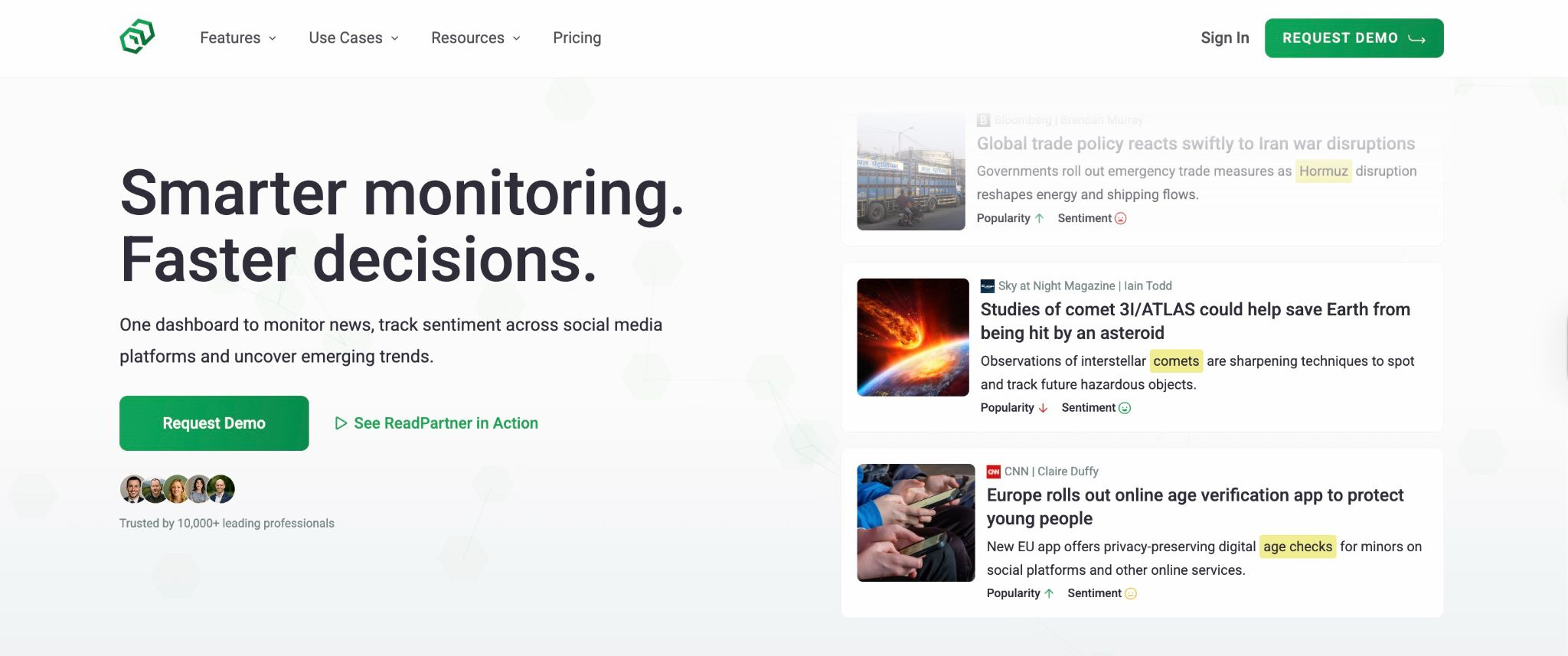
ReadPartner’s advanced media monitoring and social listening technology is designed to help professionals stay ahead of emerging stories and support crisis management.
Key features for navigating the Dutch media landscape include:
Crisis Management
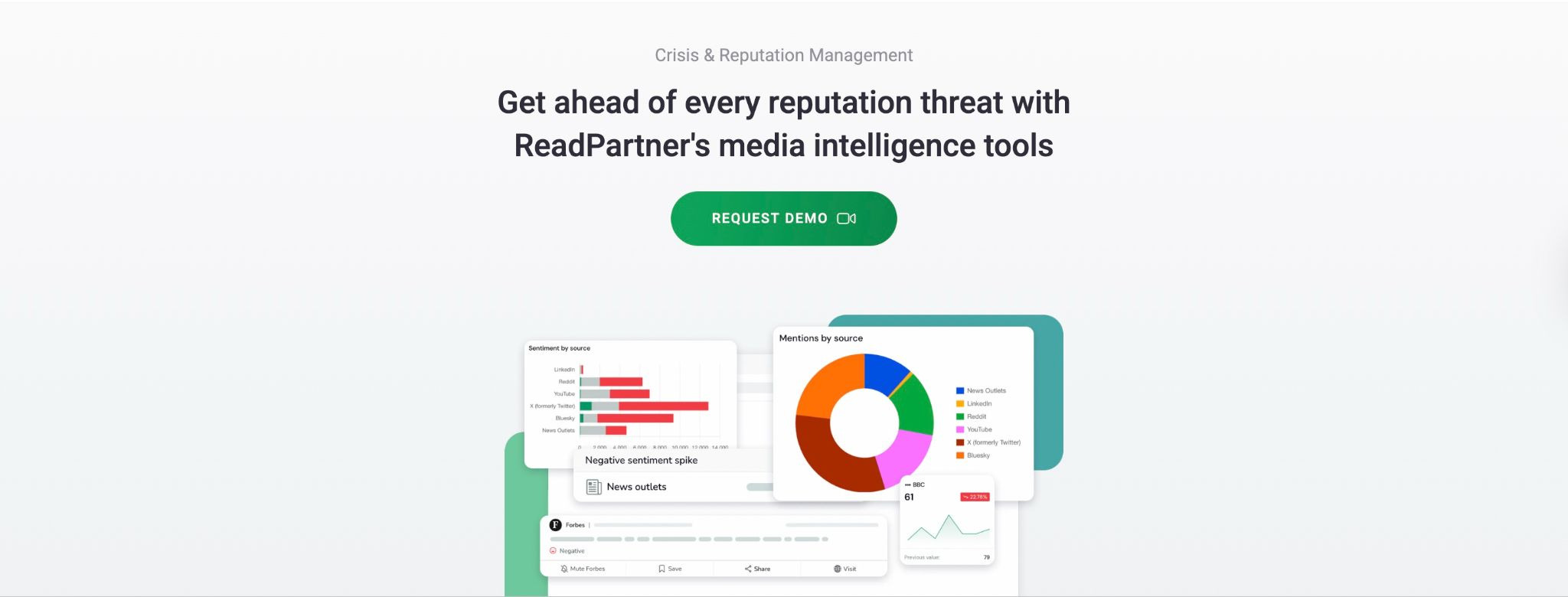
Reputation threats to your brand may start small and go unnoticed until it is too late. ReadPartner’s Crisis Management features include:
These tools can help you track important Dutch newspapers, broadcasts, and digital platforms with less manual effort, flagging potential threats before they reach wider audiences.
Given how quickly negative sentiment can spread online, ReadPartner’s tools also monitor shifts in tone and spikes in activity across news outlets and the most widely used platforms in near real time. This provides your communications team with a clear, updated view of what is spreading and how audiences are responding.
Competitor Monitoring
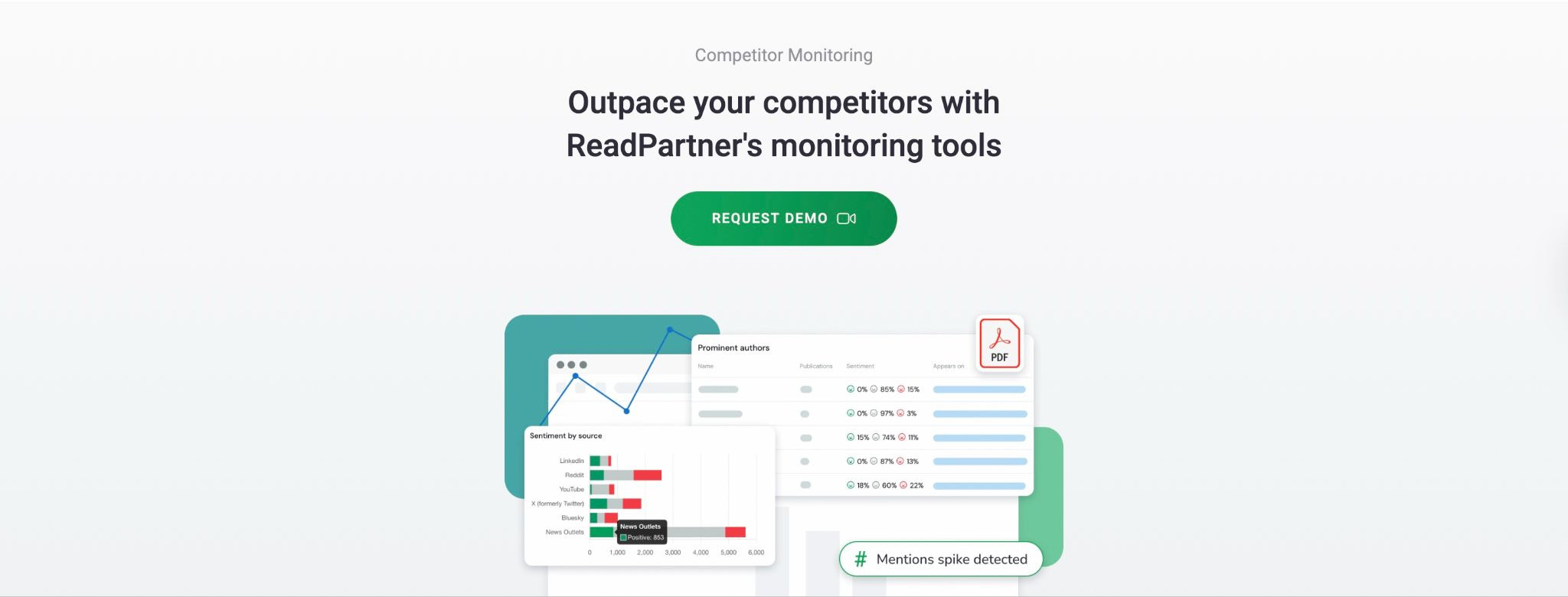
In addition to crisis management, ReadPartner’s Competitor Monitoring tools help PR and communications teams track how brands, spokespeople, and organizations are being discussed across the Dutch media landscape.
Key features include:
ReadPartner follows coverage, announcements, sentiment, and keyword-driven signals. This makes it easier for PR and comms teams to compare how different brands are portrayed across national and regional media, and to spot narrative shifts early.
The platform’s comprehensive media monitoring and social listening tools enable your team to detect emerging risks, track stories, and analyze public sentiment to prevent minor mentions from becoming major crises.
Key Takeaways
To stay on top of the Dutch media, PR and communications teams need modern social listening technology and a clear understanding of the main news outlets and platforms that shape public discourse. Traditional media monitoring cannot efficiently track how fast narratives change and evolve, especially when influencers and expert accounts with large followings report and amplify stories.
ReadPartner’s technology can help teams monitor both their own brand’s public perception and their competitors’ coverage, enabling them to detect emerging risks and mitigate potential crises.
Discover use cases and learn more on how your PR and comms team can use the ReadPartner Platform in the Dutch market here.
FAQ
Can ReadPartner adapt to the Dutch media landscape?

Yes. The ReadPartner platform can be configured to monitor both global news and local media environments of specific countries and regions, including the Netherlands.
Why do PR and comms teams need to switch to modern media monitoring tools?
With the rise of social media, which rapidly shapes and shifts public perception, we're witnessing the obsolescence of traditional monitoring methods, such as manual, press-focused tracking that fails to capture social commentary. More modern monitoring tools are designed to overcome these challenges.
What are high-risk channels in the Dutch media?
National, regional, and local media outlets that are connected to major social media platforms, as well as influencer and expert accounts, can all be considered high-risk channels.
Sources
- https://reutersinstitute.politics.ox.ac.uk/sites/default/files/2024-06/RISJ_DNR_2024_Digital_v10%20lr.pdf#page=93
- https://www.statista.com/statistics/263749/total-population-of-the-netherlands/#google_vignette
- https://research.vu.nl/ws/portalfiles/portal/393708563/Media_Compass_-_2024_-_Schapals_-_Netherlands-A_Diverse_Media_Landscape_with.pdf
- https://blossomyourcontent.eu/dutch-social-media-research-2026-2-6-million-dutch-people-have-become-unhappier/
- https://medialandscapes.org/country/netherlands.html
- https://reutersinstitute.politics.ox.ac.uk/digital-news-report/2025/netherlands
- https://www.youtube.com/NOSop3